
The first appointment (1hr in total) for new patients - IN CLINIC
This will be conducted in clinic like our further treatment sessions. Prior to the session you will be asked to complete a 'patient declaration form' and a 'pre-appointment questionnaire'. This will help speed things up during your first session so that we can maximise time for treatment.
In the session we will firstly discuss:
- All about your current issue (e.g. how did it start? What makes it worse/better?)
- Ask you what you hope to achieve from treatment, (e.g. to be pain free, be able to pick up your children again, to play sport)
- Ask about your medical history. This is to make sure that your issue is something that we can treat, and to ensure that we provide you with the best possible treatment (e.g. some conditions and medications alter how well your body heals, so we may need to undertake a gentler treatment)
We will then conduct an evaluation in order to fully diagnose the problem and identify our plan of action.
- This typically involves you undertaking some movements, (and/or I may move parts of you); palpation (feeling and pressing) of your skin/body to elicit tender areas; and conducting orthopaedic or other special tests to help me diagnose your issue. I may also examine other areas that may be the cause of any underlying problem resulting in your current pain
- Discuss your diagnosis and the treatment options available so we can agree a plan of action that will work best for you
- Occasionally I may need to refer you to a separate health professional at this stage, if I feel your condition is not something I can help with, or if we need more information such as a scan
- Please note that taking the case history and examination will take up most of your first appointment. If time is available and treatment is suitable then I will provide the discussed and agreed treatment and potentially provide some advice (e.g. exercises, hot/cold applications, movement advice etc)
You can find more information here
Yes, Osteopathy is allowed to be provided during the current Covid-19 lockdown restrictions as long as we adhere to strict cleaning and operational protocols as set out by the government and the General Osteopathic Council. At Back To Life Clinic your health and wellbeing is our top priority so we have gone over and above the recommended requirements in order to provide the safest environment we can in the clinic. Below is a short summary of some of the the cleaning and safety measures we have implemented and you can find more detail about these here.
Attending clinic may not be appropriate for everyone (especially those in more vulnerable groups or those who have been requested to shield or isolate) so we are also pleased to offer our telehealth sessions (online video calls) to enable everyone to still access our support and help.
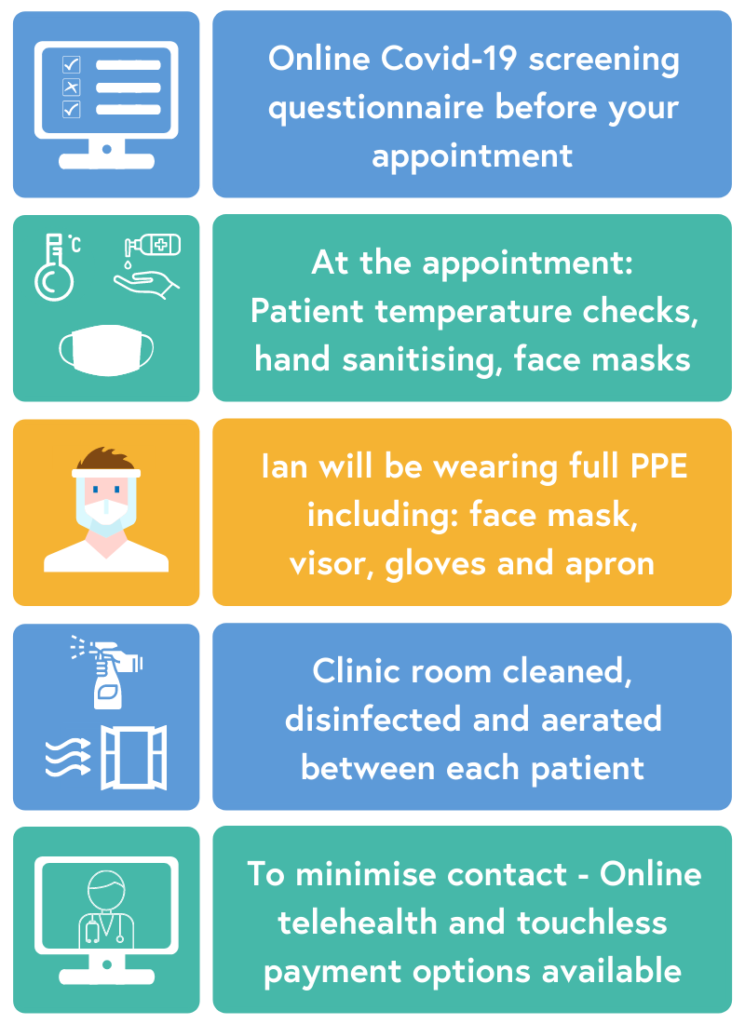
'Telehealth' is a health session provided over an encrypted video call. During the Covid-19 pandemic these have proven highly useful for individuals to provide them with advice and support. We can perform the same history taking and most of the evaluation that we can in-clinic. We obviously can't provide 'hands-on' treatment but we have succesfully guided individuals to treat themselves and we have also provided exercises and advice to enable individuals to alleviate pain or continue improvements gained in clinic.
To maximise your 'telehealth' session we recommend the following:
- You will need a computer/phone/tablet with internet connection, webcam and speakers, and the latest version of the browser installed (note - Google Chrome seems to work best if at all possible)
For the video call you will not need to download any software. A personal link will be emailed to you which simply opens the 'Cliniko' video link in your normal web browser. The video call will be encrypted. - Be somewhere private where you feel happy to talk about your personal health
- The computer/phone/tablet ideally needs to be positioned so that, if required, you can step away from it in order to do some basic movements that can be captured on the webcam e.g. bending to touch your toes
- Wear clothes that allow me to see your body movements, e.g. shorts/leggings/sports tops etc
Obviously you won't be able to pay in the clinic, so we would ask that you either use the pre-pay option in the online booking page, or alternatively we will provide you with a secure payment link to pay online before your appointment.
As an osteopath I am recognised by the NHS as an Allied Health Professional and primary practitioner, which basically means that I am able to diagnose your issue. To qualify, I have undertaken a 5 year Masters degree in Osteopathy (requiring over 1,200 hours of hands-on treatment in clinic), obtaining an M.Ost with Distinction.
Since qualification, I have worked in both the NHS and private practice settings before starting Back To Life Clinic. Osteopaths are regulated by the General Osteopathic Council (the osteopathic version of the General Medical Council for Doctors) which requires me to continuously update my skills through continuing professional development. I am a member of the Institute of Osteopathy and the Academy of Physical Medicine. I am also a qualified sports massage therapist.
Yes, I have personal medical malpractice insurance with the Institute of Osteopathy for all treatments and services provided. It is a legal requirement to have insurance in order to be a registered osteopath.
2 hours free parking is available at Morrisons next door. Use the downstairs car park and follow the directions here
Back To Life Clinic is fully compliant with the General Data Protection Regulations (GDPR) and registered with the Information Commissioners Office (ICO). The BTLC privacy policy can be found here. All your information will be kept securely. By law I am required to keep patients' treatment files for 8 years after their last appointment (or, if the patient is under 18 years old at the time of their last appointment, for 8 years after their last appointment, or until they reach the age 25 – whichever is later).
I value your feedback to help me provide the best customer service in the industry. If you have any recommendations for how we can improve our service (or if you feel there is anything we did really well!) then please fill in our online survey or please ask for a feedback form at your next appointment. You can also call me on 01636 36 20 22 or email ian@backtolifeclinic.co.uk.
Yes, you are very welcome to bring a friend or relative with you into the treatment room. However, wherever possible we are asking you to limit the numbers of people in the clinic room with you in order to reduce the chances of any transmission of the Covid-19 virus.
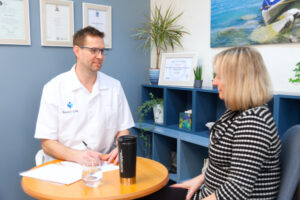
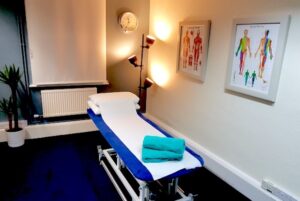
My aim is to make the clinic a really inviting and calming space to help get you free from pain. We have had to make some modifications in order to enable easier disinfection and cleaning of surfaces but we hope we have still created a warm and inviting space to welcome you into.
Customer care is something we are really committed to and passionate about. If for any reason we haven’t met your expectations, or provided you with the level of service we have said we will, or if you have a complaint, we would really appreciate your honest feedback to help us improve. Please be assured that I will treat any complaint seriously, deal with it promptly and learn from it by reviewing, or – if appropriate – improving our standards.
In the first instance please do contact Ian on 01636 36 20 22 or via ian@BackToLifeClinic.co.uk. Our full complaints procedure detailing how we will handle and resolve your complaint (plus options for independent involvement via services like the Institute of Osteopathy resolution service) can be found in our complaints policy.
If you have your own health insurance policy, you will be expected to pay for each visit yourself at the time of the appointment and you will be sent a receipt so that you can reclaim the fee from your insurance company. We recommend that you contact your insurance company before booking treatment to ensure you comply with the terms of your individual policy.
Payment can be by credit/debit card or Apple/Google/Samsung Pay. We also accept cash.
In order to provide a touchless payment service there is now also a pre-pay option when booking online, or on request we can split payments to enable contactless transactions.
Payment must be made either before, or at, the time of the appointment.
Yes, the clinic room is situated on the ground floor, right next to the reception area. There is a small ramp to negotiate but it should be fine to access in a wheelchair. If you need to park closer than Morrisons please contact us beforehand so that we can arrange for you to park in the gated business centre car park. This can only be accessed by prior arrangement. Please call 01636 36 20 22 to arrange.
No. Osteopaths are primary care practitioners – which means that we are trained to diagnose your issue clinically using a range of medical and orthopaedic tests, and to refer you to your GP if appropriate. This means that most patients 'self refer' to an osteopath for treatment.
Although referral by a GP is not necessary, you are encouraged to keep your GP informed as this will ensure you receive the best possible care from both health professionals.
I often treat patients who have seen one or more therapists in the past. I find that my focus on the underlying cause helps me to provide long lasting improvements for my patients which other therapists have been unable to achieve.
No. By law all osteopaths must be registered with the General Osteopathic Council and have completed either a 4 or 5 year degree with over 1,000 hours of hands-on treatment of real patients.
I have obtained a Masters (M.Ost) degree with distinction and have since worked within the NHS and private practice arenas before starting my own clinic. I am also a qualified sports massage therapist and HSE Display Screen Equipment assessor.
Yes, but anyone aged under 18 must legally be accompanied by their parent or legal guardian at every appointment.
Osteopathy is a safe treatment to have during pregnancy and can help with many pregnancy related aches and pains. I will always modify any treatment plans to accommodate your pregnancy (e.g. administering treatments on your side rather than on your back).
I will always take a full case-history at your initial consultation in order to evaluate your suitability for treatment. Conditions such as uncontrolled, high blood pressure would prevent treatment. It is also not recommended to have treatment during a 'flair-up' of inflammatory conditions such as rheumatoid or psoriatic arthritis. If you are concerned about having osteopathy alongside any of your diagnosed conditions, I would recommend discussing your concerns with your consultant in the first instance.
Osteopathy is a system of diagnosis and treatment for a wide range of medical conditions. It works with the structure and function of the body, and is based on the principle that the well-being of an individual depends on the skeleton, muscles, ligaments and connective tissues functioning smoothly together.
To an osteopath, for your body to work well, its structure must also work well. So osteopaths work to restore your body to a state of balance, where possible without the use of drugs or surgery. Osteopaths use touch, physical manipulation, stretching and massage to increase the mobility of joints, to relieve muscle tension, to enhance the blood and nerve supply to tissues, and to help your body’s own healing mechanisms. They may also provide advice on posture and exercise to aid recovery, promote health and prevent symptoms recurring.
See General Osteopathic Council for more information.
Osteopathy is recognised by the NHS as an Allied Health therapy (as is physiotherapy, but chiropractic is classed as a complimentary therapy).
I use hands-on techniques to relieve pain and tension and improve mobility. Treatment is individually-tailored, and may include these techniques:
- Soft tissue massage – where I press into the muscle
- Muscle stretching – where I move the body to stretch the muscles. This can include METs (muscle energy techniques – also known as Proprioceptive Neuromuscular Facilitation (PNF))
- Functional techniques – this is a fantastic osteopathic technique, especially for very painful areas, where I move the joint/muscle into a point of ease (i.e. where it likes and relaxes rather than where it tenses up) instead of the usual stretch techniques that force the muscle into a relaxed state
- Joint articulation/mobilisation – where I move the joints to increase range
- Joint manipulation – where I use a quick force to increase movement in the joint
- Techniques to encourage fluid flow, lymphatic drainage and tissue repair
- Postural and ergonomic advice (such as how to sit comfortably and pain free at your work desk), lifestyle changes and technique advice to help avoid future injury
- Stretching advice – either to enable you to improve/maintain the benefits from treatment, or to enable you to self-manage your condition after treatment has been completed (such as stretching advice to warm-up/cool-down when running)
- Strengthening exercises – to improve any areas that need to be stronger to help keep you free from pain whilst doing the things you love
Your first appointment (initial consultation) will normally last approximately 50-60 minutes overall. This will now be split into two parts - Part 1 is a video 'telehealth' call lasting approximately 30mins, Part 2 is in the clinic approximately lasting a further 30mins.
Subsequent visits (further treatments) will normally last for 25-30mins. However, please note that these appointment lengths may vary as some conditions need extra time and some require less time.
For your first visit please book an 'initial consultation' appointment. This will normally last approximately 50-60 minutes and will include taking a case history and evaluation along with treatment. For subsequent visits you can choose either a 60 minute or 30 minute appointment.
This depends on the reason for the assessment. A DSE assessment will help your company comply with HSE regulations and assesses whether the desk, seat, screen and environment meets the required standards. The desk postural assessment is focused on pain relief/prevention and will specifically focus on your/the employee's posture at their desk and provide adjustments to their setup to help minimise any neck, back and shoulder/arm/wrist related pain. If you/your employee is in pain, I would recommend the desk postural assessment.
Discs are a tough round structure between the bones (vertebrae) in the back and neck. The outer surface is a tough structure, but the middle is more like a toothpaste consistency. Discs don't 'slip', but if the outer surface is damaged it weakens and can 'bulge' out a little (known as a slipped disc, disc bulge, disc prolapse or disc herniation). If the outer wall pushes out a lot this can cause pressure on the spinal cord (or the nerves coming from it), causing symptoms like 'pins and needles' in the legs.
Referred pain is when you feel a pain in an area but it actually originates from somewhere else. This is often the case with pain in the legs actually being caused by an issue in the back. The most well known example for most people is during a heart attack. People often feel pain in their arm and shoulder when the actual pain is coming from the heart – it's just that your brain gets confused and thinks it's coming from your arm!
A strain is an injury to a muscle. These are graded 1-3, with 3 being a complete rupture (break) across the whole muscle, and 1 being a minor tear involving a small percentage of the muscle fibres. The grade of strain will impact the time to heel and the treatment required.
A sprain is an injury to a ligament (the structure that holds a bone to another bone). For most people this takes the form of a lateral ankle sprain, where you roll over the outside of your foot. Another common area of injury is the knee, with the Medial collateral ligament (MCL), Lateral collateral ligament (LCL), Anterior cruciate ligament (ACL) and Posterior cruciate ligament (PCL) being affected.